
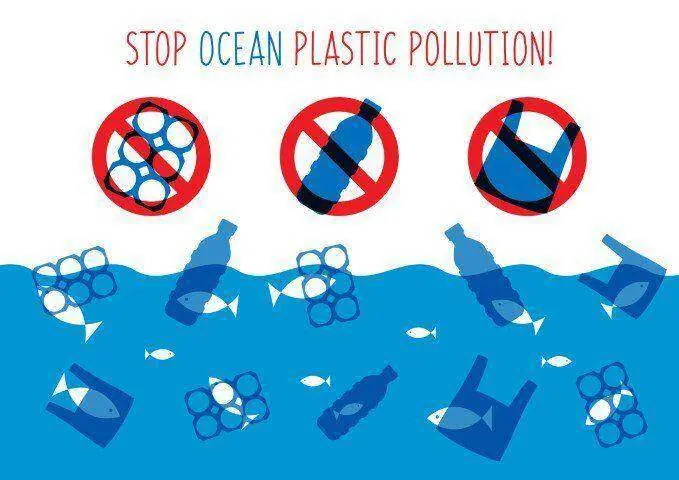
Plastic, MARPOL and the circular economy: prevention of pollution caused by plastic
News regarding pollution caused by plastic in seas and oceans now appears on a regular basis. One of the latest cases to cause public outcry was the discovery of a plastic bag in the Mariana Trench, one of the most inaccessible places on the planet, located 10,994 meters below sea level.
Plastic is an economical, durable and versatile material. However, these characteristics, in addition to being the reason why it is so widely used in everyday life, make it one of the greatest threats to marine ecosystems.
Many waste materials of biological origin undergo a decomposition process, but in the case of plastic, due to its chemical structure, this process can take hundreds of years. Even though the most common types of plastic found in the ocean tend to break down into smaller pieces, these pieces may never reach full decomposition and re-enter the food chain through ingestion by fish and other animals. This type of material is called microplastic and consists of particles smaller than 5 mm.
It is not easy to understand where all the plastic found in our oceans comes from. Most of the plastic that ends up in the seas derives from two different causes:
- activities of ships and offshore platforms;
- improper waste disposal on land.
The MARPOL Convention and the Regulation of Marine Waste
Among the main treaties regulating the risks of marine pollution is the convention known as MARPOL (an acronym for MARine POLlution). With the aim of preventing pollution caused by plastic in the seas (and by other substances), the international agreement regulates aspects such as ship exhaust gases, the use of hydrocarbons and the management of marine waste.
The MARPOL Convention has been adopted by numerous countries that globally represent almost all of the world’s tonnage. It consists of articles, protocols and a series of annexes. Italy adopted the convention with laws 662 of 29/09/1980 and 438 of 04/06/1982.
The annexes each address “different forms of marine pollution caused by ships”:
- Pollution by hydrocarbons and mineral oils;
- Pollution by noxious liquid substances carried in bulk;
- Pollution by harmful substances carried in packaged form;
- Pollution by ship sewage;
- Pollution by solid waste discharged from ships;
- Air pollution by SOx and NOx from marine engine exhausts.
Annex V specifically addresses different types of waste and the manner in which they can be disposed of, regulating various aspects such as the minimum distance from land. The most significant aspect of the annex is the total ban imposed on the disposal at sea of all forms of plastic. The requirements for waste disposal described by Annex V are illustrated in the following diagram:
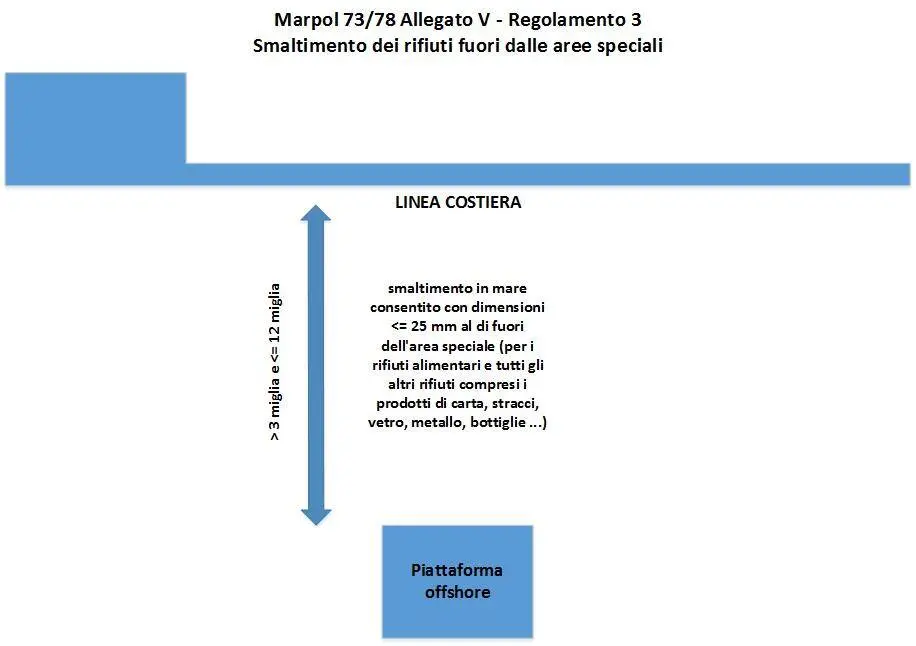
In summary, only waste that meets the prescribed size characteristics can be managed. For a ship or platform, however, even the volume occupied by waste generated on board constitutes a problem to be managed concerning both space and costs. The volumetric reduction of materials to be processed makes their treatment simpler.
To this end, SatrindTech produces professional shredders of reduced dimensions, from 4 to 10 HP, designed to be installed on large vessels and offshore platforms to comply with MARPOL 73/78 requirements.
Ocean Pollution: Prevention and Circular Economy
A large portion of the plastic that ends up in the oceans, however, comes from land. One of the causes is the use of the sea, directly or indirectly, as an illegal dump. A recent study has shown that a very large portion of the plastic found in the oceans comes from 10 of the most polluted rivers on the planet.
The debate on possible solutions sometimes focuses on extraordinary interventions or new miraculous technologies. There is much emphasis, rightly so, on promoting policies for the reduction of the consumption of packaging, containers and bags. However, good intentions, unfortunately, do not solve the management of existing waste.
What is missing is addressing the problem of waste in general, and plastic in particular, with ecological principles applied at a system level. The concept of circular economy is, in fact, complementary to that of prevention.
The solution for preventing marine waste is not easy to find, but it involves the disposal cycle as a whole, starting from land. The industrial shredders produced by SatrindTech are essential tools for correctly processing the waste materials that society produces every day. Waste such as plastic, subjected to shredding processes, can be more easily reintegrated into a cycle of reuse or proper disposal, eliminating from the outset the risk that it may end up in the sea.