
Tire Shredding
The challenge: managing the complexity of tire shredding
The treatment and recovery of end-of-life tires represent a crucial step for the circular economy and the efficiency of industrial processes. However, tire shredding presents significant technical challenges that require a specialized engineering approach. The strong variability between car tires, truck tires, and special applications, the presence of steel and textiles, the different input sizes, and the need to obtain a particle size consistent with subsequent stages make end-of-life tires one of the most complex applications in mechanical recycling.
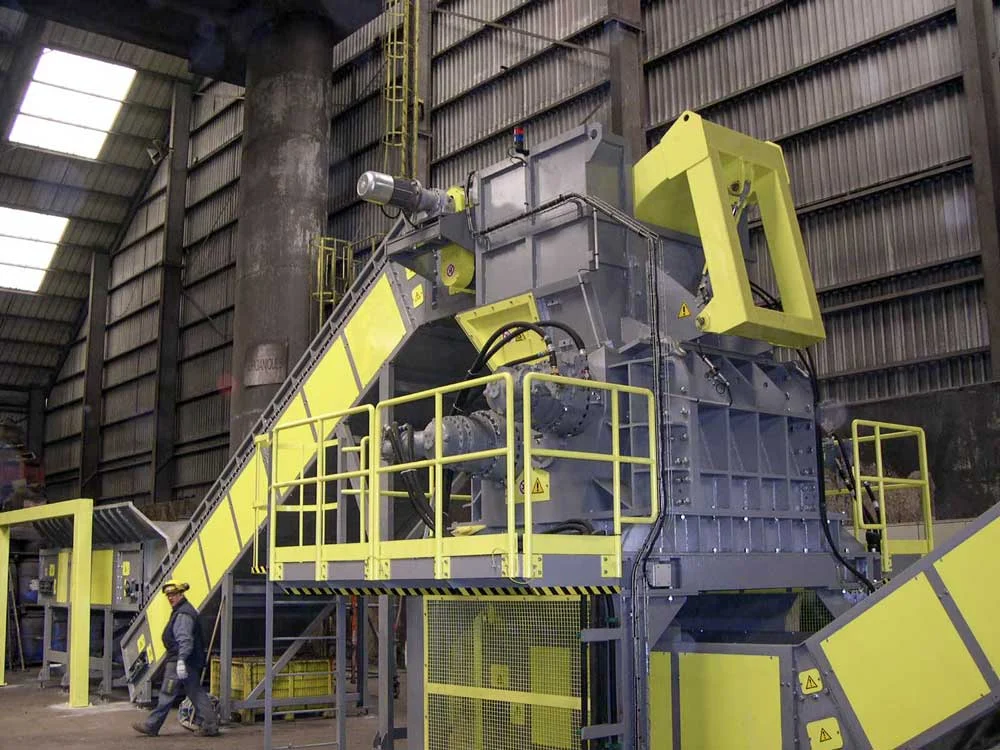
Critical issues in tire shredding
Tire shredding presents specific critical issues already in the early stages of the process, because performance changes significantly based on the type of rubber to be processed and the required throughput.
Car tires and heavy-duty vehicle tires, for example, have very different behavior, structure, and resistance, with direct impacts on productivity and the choice of the most suitable technology.
As volumes or material complexity increase, it becomes essential to have high-torque systems capable of ensuring effective volume reduction, operational continuity, and resistance to strong mechanical stresses.
| Specific Challenge | Consequences of a Non-Specialized Approach |
|---|---|
| Material heterogeneity (car, truck, special tires) | Inadequate torque, unstable productivity, and chamber saturation |
| Presence of steel and structural reinforcements | Accelerated wear of blades and transmission components |
| Requirement for controlled particle size for chips or subsequent stages | Material unsuitable for screening, recirculation, and separation |
| Need for high throughput on heavy end-of-life tires | Overloads, machine stoppages, and irregular feeding |
| OTR or large-diameter applications | Need for dedicated pre-treatments, with increased plant complexity |
The SatrindTech solution: shredding engineering for tires
At SatrindTech, we do not supply simple shredders, but shredding engineering solutions. Our approach starts with an in-depth analysis of your specific application. Whether it involves car tires, truck tires, car/truck mixes, or more complex end-of-life tire processes, our technical specialists work with you to understand the required throughput, final particle size, level of automation, and subsequent process stages.
This consultancy process allows us to design a customized solution, which may include:
Our machines are built to be robust and durable, ensuring reliability and low total cost of ownership even in the most demanding end-of-life tire applications, where throughput consistency and mechanical integrity are critical.

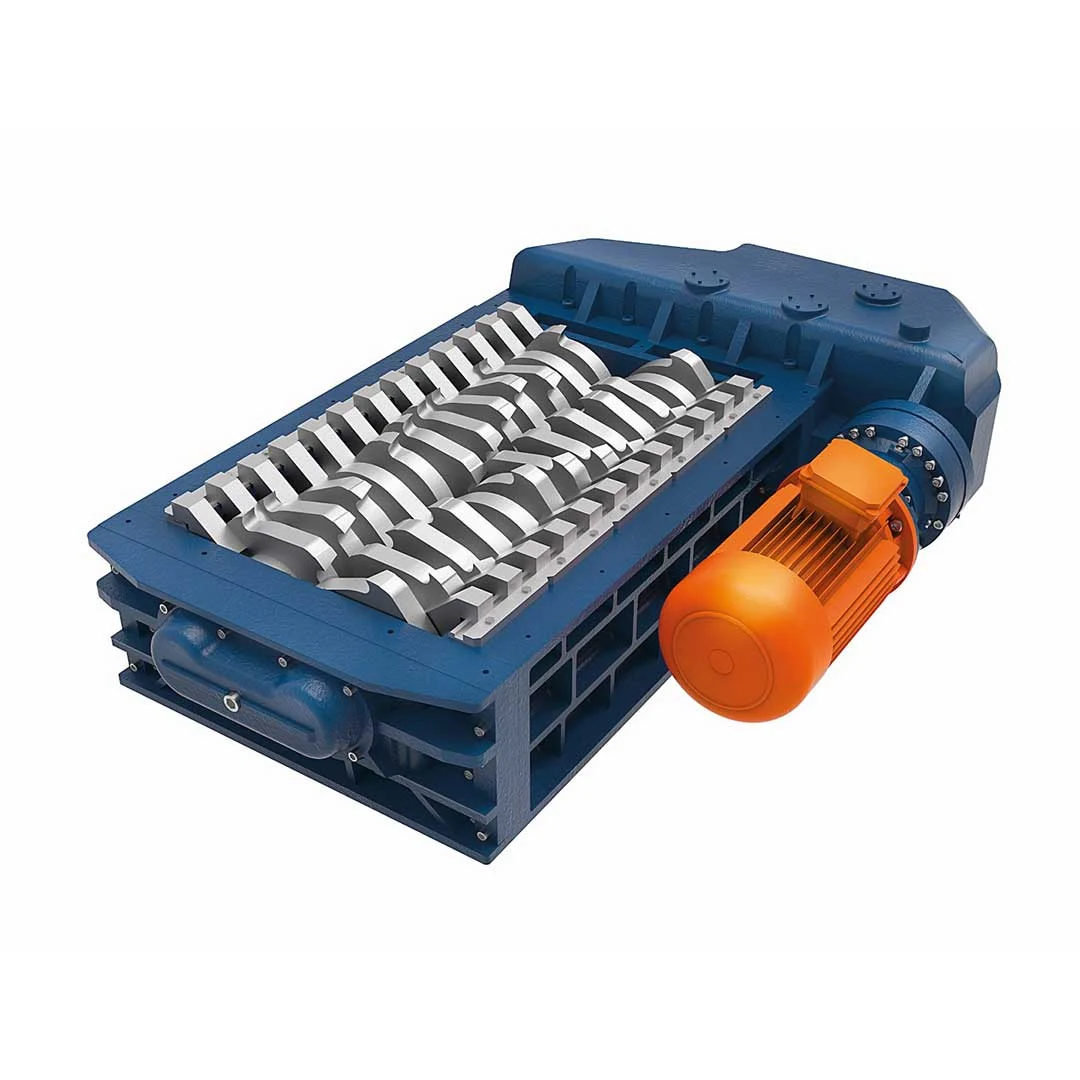
Thanks to over 40 years of experience, we have developed specific configurations for every need. Below are some of the most suitable models for tire shredding:


Specific applications and productivity
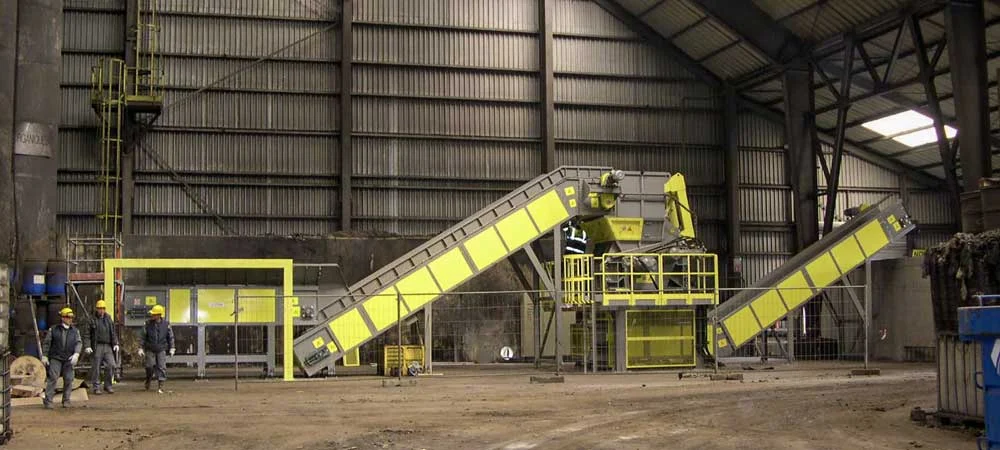
Our solutions for tire shredding are designed to meet specific requirements in the end-of-life tire sector. Thanks to the experience gained in numerous quotations and installations, we are able to propose configurations consistent with the material and the line layout.
Car tires
Recommended model: K 8/30
Indicative productivity (kg/h): approximately 1,500
Technical notes: Volume reduction in first pass for small/medium throughput.
Car tires
Recommended model: K13/60/M
Indicative productivity (kg/h): 3,000 – 4,000
Technical notes: Output in strips compatible with blade thickness.
Truck tires
Recommended model: K13/60/M
Indicative productivity (kg/h): 800 – 1,000
Technical notes: Lower throughput due to mass and more tenacious structure.
Mixed car and truck tires
Recommended model: 2R 15/150
Indicative productivity: 6,000 – 8,000
Technical notes: High-torque volume reduction with good operational continuity.
Tires
Recommended model: 2R 20/300
Indicative productivity: 10,000 – 12,000
Technical notes: Solution for high throughput in volume reduction.


The advantages of the SatrindTech approach
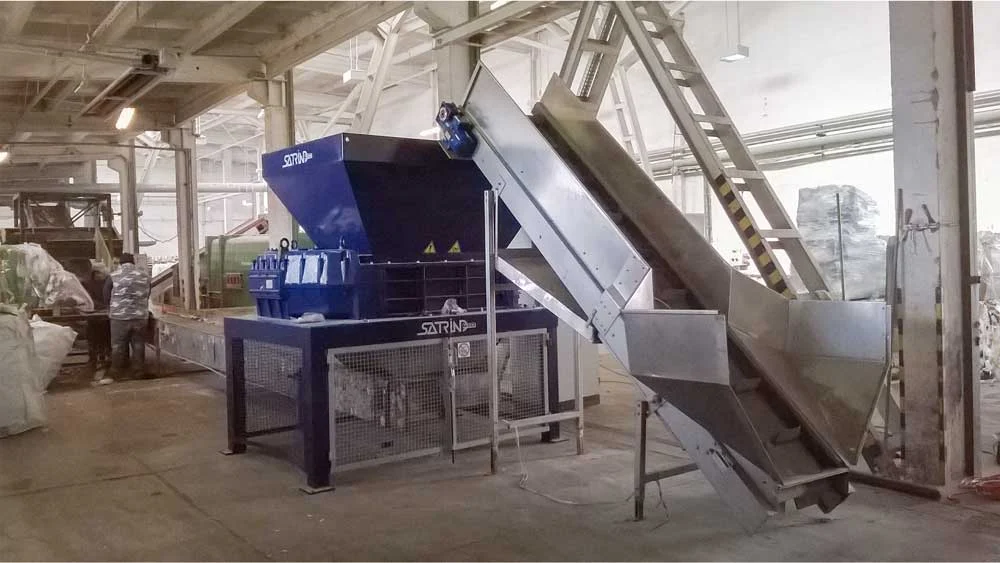
Choosing SatrindTech’s engineering approach for tire shredding means obtaining concrete and measurable results:
Contact us to speak with one of our specialists. We will analyze your requirements to design the customized shredding engineering solution for you, whether you need to process car tires, truck tires, or special applications with multiple process stages.